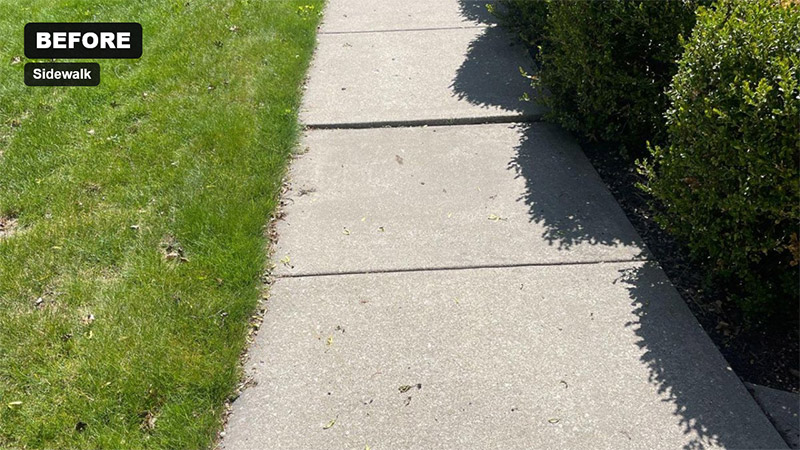
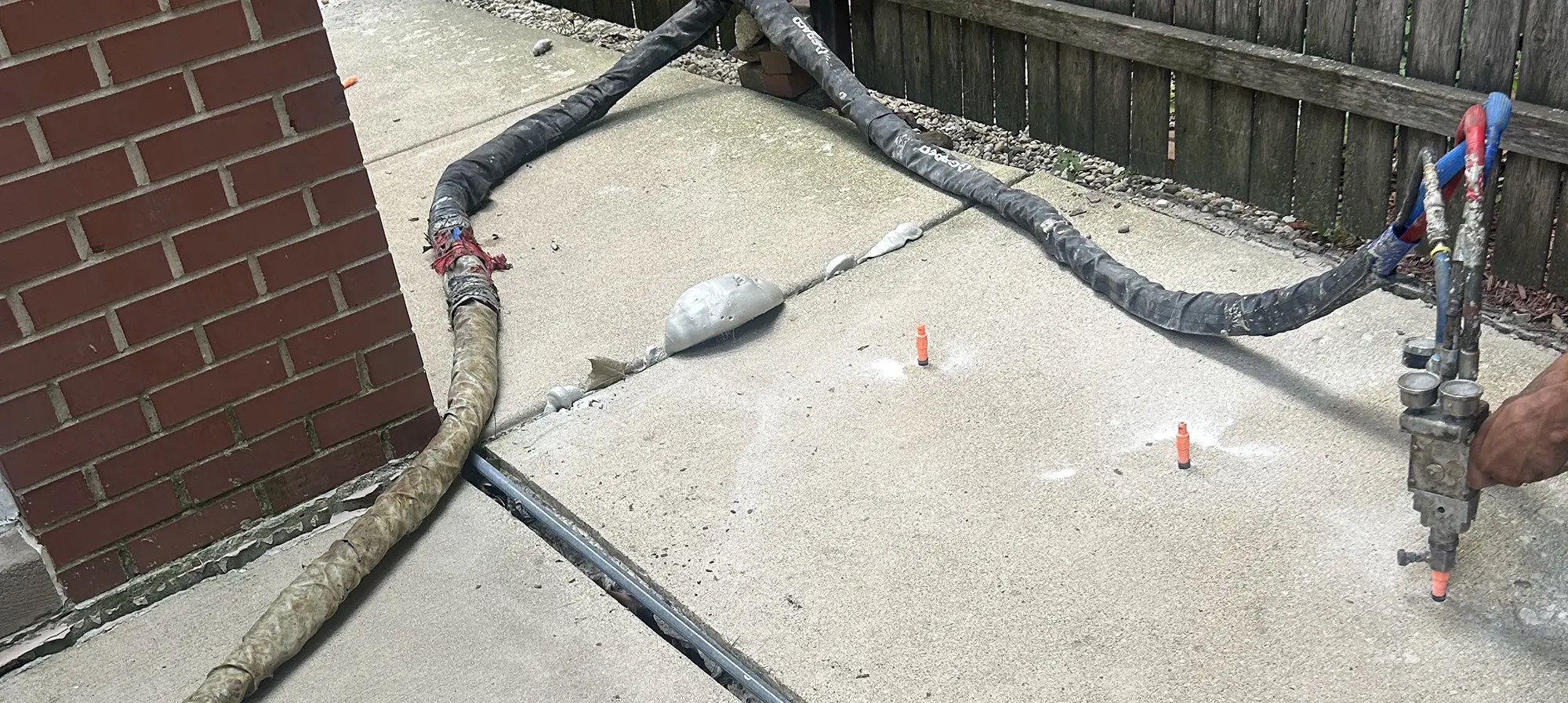
Driveway Sunk at the Garage in Tinley Park? What a Typical Lift Looks Like
A driveway that drops 2 to 3 inches where it meets the garage is one of the most common concrete problems homeowners in Tinley Park, IL run into. In most cases the slab itself is still sound. What failed is the ground underneath it. This page walks through a typical driveway lift for a Tinley Park home: the problem, why it happens in this area, how Raise-Rite IL fixes it with polyurethane foam, and what the result looks like.
This is a typical project, not a write-up of one specific home or address.
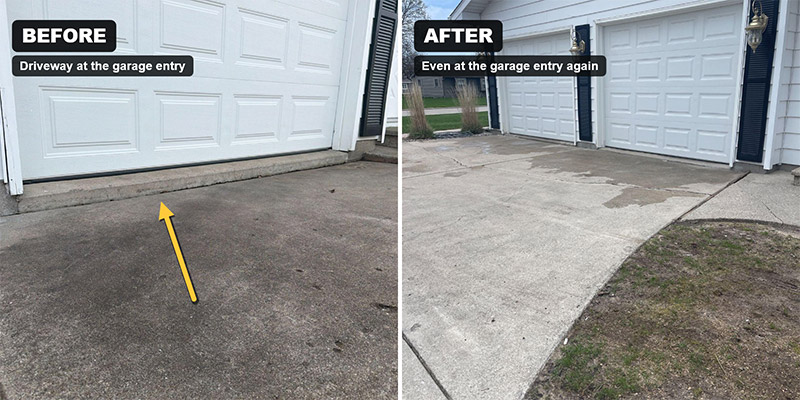
The Problem: Both Sides Settle at the Garage Entry
In a typical job like this, the driveway sections on both sides of the garage entry have sunk 2 to 3 inches. That leaves a drop or gap where the driveway meets the garage floor or apron.
Homeowners usually notice a few things first:
- A lip at the garage door that catches feet, bike tires, trash cans and the wheels of a stroller or walker
- Water that runs toward the garage door instead of away from it
- Joints between slabs that no longer line up
- A hollow sound when the slab is tapped or driven over, which points to a void underneath
- A home inspector’s note about a trip hazard or drainage
A step of 2 to 3 inches is more than a cosmetic problem. It is a trip hazard, it lets water collect near the garage, and it tends to get worse over time because the voids under the slab keep growing.
The good news is that the concrete is often in good condition. If the slab is not crumbling or badly cracked, it is usually worth saving.
Why It Happens Around Tinley Park
Concrete rarely sinks because the concrete is bad. It sinks because the soil under it stops holding it up. In Tinley Park and across the south suburbs and wider Chicagoland, a few causes come up again and again:
- Backfill that was never fully compacted. When a house is built, the soil next to the foundation and garage is dug out and later refilled. If that fill isn’t packed tightly, it slowly settles over the years, and the driveway apron follows it down. This is a common reason the drop shows up right at the garage.
- Water washing soil out. Downspouts that discharge next to the slab, poor grading and heavy rain can carry soil out from under the concrete and leave voids.
- Freeze-thaw cycles. Illinois winters freeze and thaw the moisture in the soil again and again. Each cycle can loosen the support under a slab a little more.
- Clay-heavy soil. Clay swells when it is wet and shrinks as it dries, so the ground under a driveway does not stay put through the seasons.
Knowing which cause is at work matters, because it decides what else should be done. If water is the culprit, extending a downspout or correcting the grading is worth doing along with the lift. Otherwise the same problem can come back.
How It’s Fixed: Polyurethane Foam Lifting
Raise-Rite IL lifts concrete with polyurethane foam only. We do not offer mudjacking. Here is how a typical driveway lift goes:
- It starts with a free virtual or instant estimate, so you can find out whether lifting suits your driveway before anyone comes out.
- Look at the slab and the cause. The crew checks how far the slab has dropped, where the voids are likely to be, and what is causing the settling.
- Drill small injection holes. The crew drills small holes in the sunken slab. They are a fraction of the size of the holes mudjacking needs.
- Inject the foam. Polyurethane foam goes in through the holes. It expands to fill the voids under the slab and, as it does, lifts the slab back toward level.
- Watch the level as it rises. The crew monitors the slab through the lift and stops when it meets the garage floor and the surrounding concrete.
- Patch and clean up. The holes are patched and the work area is cleaned up.
Because the foam is light, it adds very little weight to soil that has already given way. It also fills and supports the area under the slab instead of just pushing it up. The crew will explain timing and when you can use the driveway again when you get your estimate.
For jobs where the soil itself is the issue, Raise-Rite IL also offers deeper soil stabilization, soil testing and drainage solutions, so the fix addresses the cause and not only the symptom. See our Water control & erosion mitigation service for more on that.
What the Before and After Shows
The before and after images for this page show a typical driveway at the garage entry. In the before view, the driveway sits low against the garage, leaving a visible step. In the after view, the same area has been brought up to meet the garage floor, and the lip is gone. The images illustrate a typical result and are not tied to a particular home.
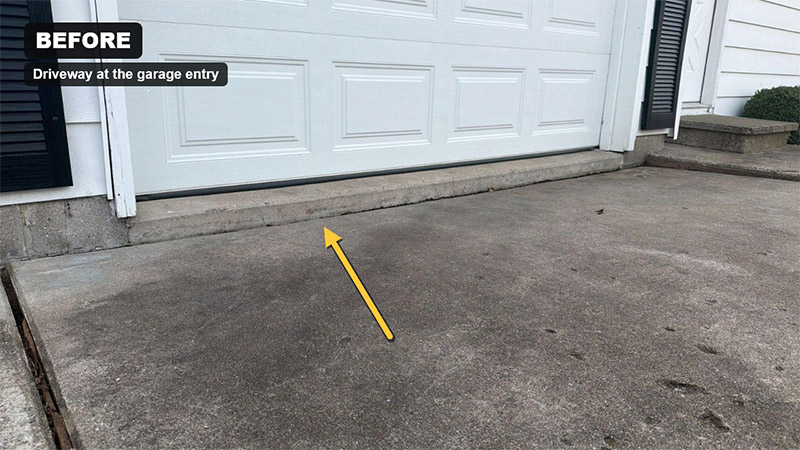
The Result: A Driveway That Meets the Garage
After a typical lift, the driveway at the garage entry sits level with the garage floor again. The lip is gone, and the slab has solid support under it. In most cases water now has a better path away from the garage, though drainage also depends on the grading around the home.
Compared with replacement, lifting generally means:
- No tear-out and no pile of broken concrete in your yard
- No waiting for new concrete to cure before you can use the driveway
- Your existing driveway, landscaping and finish stay in place
- A cost that is often considerably lower than replacing the slab
Raise-Rite IL backs its work with a 5-year warranty.
When Lifting Is Not the Right Answer
Lifting has limits, and you should hear them before any work starts. Foam brings a settled slab back toward level. It does not repair concrete that is badly broken, crumbling or heavily cracked, and it cannot fix a slab whose surface has failed. If your driveway is in that condition, replacement may be the better choice, and we will tell you so. If joints and cracks need attention after a lift, concrete caulking and sealing can help keep water out. See our Concrete caulking and sealing service.
Related Work
About Raise-Rite IL
Raise-Rite IL is a family business that has been lifting concrete since 1974. It has more than 50 years of experience and over 100,000 jobs completed, and it serves Illinois and Chicagoland from Carol Stream. The polyurethane foam we use contains 40% or more recycled and renewable materials.
Get Your Driveway Checked
Not sure whether your driveway can be lifted?
Request a free virtual or instant estimate through our Contact / free estimate, or call 877-407-2473 to talk with the Raise-Rite IL team.
If lifting is not the right fix, we will say so. You can also visit https://raiserite.com.