RESTORING THE LOWER DRIVEWAY AND THREE SETTLED SIDEWALK SECTIONS
Concrete settlement does not always affect just one slab.
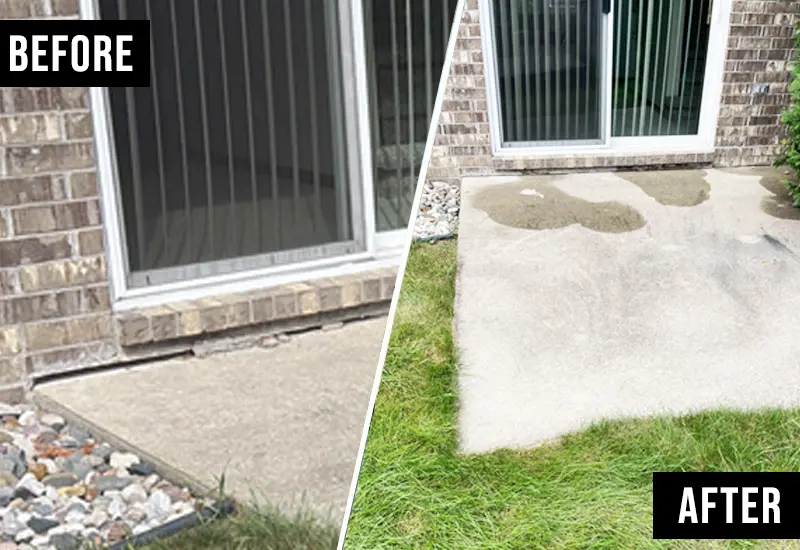
At this Niles property, the lower half of the driveway had settled out of position, while three sidewalk sections next to the driveway had also dropped unevenly.
The result was a larger repair area with multiple concerns: an uneven driving surface, raised joints, possible trip hazards, and concrete that no longer lined up the way it originally did.
The homeowner wanted the affected sections raised and supported as close to their original position as conditions would allow—without tearing out and replacing the driveway and sidewalk.
The Challenge
The lower portion of the driveway had experienced noticeable settlement, creating uneven transitions between concrete sections.
At the same time, three adjoining sidewalk panels had also shifted and settled.
The homeowner was concerned about:
- Uneven driveway sections
- Rough transitions when entering or leaving the property
- Trip hazards along the sidewalk
- Continued movement beneath the concrete
- Water collecting in low areas
- The cost and disruption of replacement
Because the driveway and sidewalk were located next to one another, the repair needed to account for how the separate slabs aligned together.
The goal was to:
- Raise the bottom half of the driveway toward its original elevation
- Restore support beneath the affected slabs
- Lift three adjacent sidewalk sections
- Improve transitions between the driveway and walkway
- Preserve as much of the existing concrete as possible
The work would be completed on a best-as-possible basis, since the age, condition, and existing movement of the slabs can affect how far concrete can safely be lifted.
The Raise-Rite Solution
After evaluating the driveway and sidewalk, our team recommended polyurethane concrete lifting and stabilization.
This approach allowed us to work beneath the existing concrete without removing the slabs.
The repair was designed to:
- Lift the settled lower driveway sections
- Fill voids beneath the concrete
- Restore support under weak areas
- Raise the three adjoining sidewalk panels
- Reduce trip hazards and uneven transitions
- Help limit additional settlement
By repairing both areas during the same project, we could improve the way the driveway and sidewalk met while addressing the underlying support problems.
The Fix (3-Step Process)

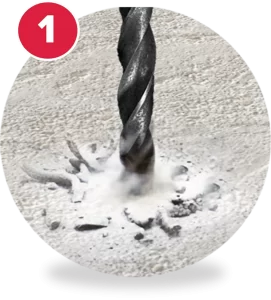
Step 1: Drill
Small access holes were strategically drilled into the affected driveway and sidewalk sections.
The hole placement allowed our crew to reach the voids beneath multiple slabs while carefully controlling the lift.
Step 2: Pump
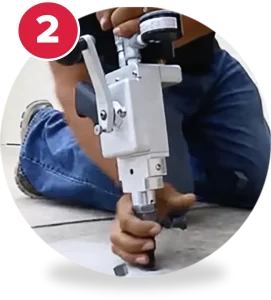
High-density polyurethane foam was injected beneath the concrete.
As the foam expanded, it filled empty spaces, restored support, and gradually raised the lower half of the driveway and the three sidewalk panels toward their original elevations.
The lifting process was carefully monitored to achieve the best practical alignment without placing unnecessary stress on the existing concrete.
Step 3: Patch
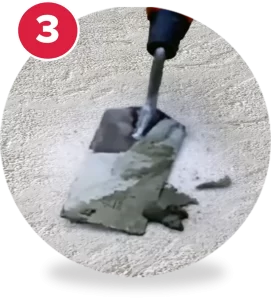
After the slabs were raised and stabilized, the access holes were patched with a durable concrete finish.
The repaired areas were then left clean and ready for normal use.
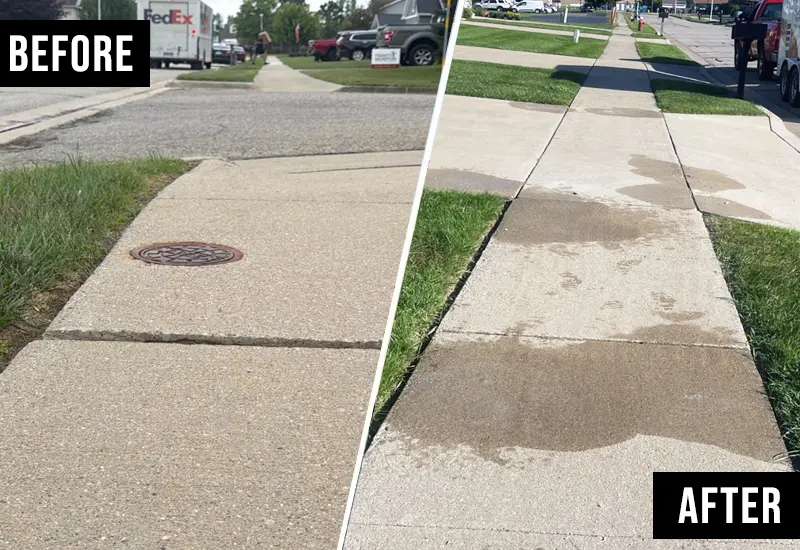
The Results
The completed project improved both the driveway and the adjoining walkway.
The repaired concrete is now:
- Better aligned across the lower driveway
- More evenly supported from below
- Smoother at the slab transitions
- Safer along the three sidewalk sections
- Less vulnerable to continued settlement
The homeowner avoided the cost, mess, and extended downtime associated with removing and replacing several sections of concrete.
Most importantly, the project addressed the problem beneath the slabs while restoring the affected areas as close to their original positions as conditions allowed.
WHY DRIVEWAYS AND SIDEWALKS SETTLE IN NILES, IL
Concrete settlement is common throughout Niles due to a combination of soil and moisture conditions.
Common causes include:
- Soil compaction beneath slabs
- Water erosion and washout
- Freeze-thaw cycles during Illinois winters
- Moisture entering open joints
- Long-term ground movement
Driveways and nearby sidewalks may settle at different rates because they are separate slabs with different loads and base conditions.
As support beneath the concrete weakens, panels can sink, tilt, or separate from neighboring sections.
Polyurethane concrete lifting fills the voids beneath those slabs and restores support without requiring full replacement.
RAISE-RITE CONCRETE LIFTING IN NILES, IL
Raise-Rite has helped Illinois homeowners repair sinking and uneven concrete since 1974.
With more than 100,000 completed projects, our team regularly repairs:
- Driveways and driveway approaches
- Sidewalks and walkways
- Garage aprons
- Front steps and entryways
- Patios and porches
- Concrete trip hazards
If your driveway and nearby sidewalk are settling together, Raise-Rite can evaluate the affected sections and explain what can be safely lifted and stabilized.