A concrete pad at the base of a shed or outbuilding is easy to ignore until it sinks. Once it drops below the door threshold or the neighboring sidewalk, it leaves a lip that catches feet, wheels and tools. This page walks through what a typical lift looks like for Oak Brook, IL property owners: the problem, why it happens in this part of Chicagoland, how Raise-Rite IL fixes it with polyurethane foam, and what the result should look like.
This is a typical project write-up, not a report on one specific home or address.
The Problem: Pads That Dropped Below the Shed and Sidewalk
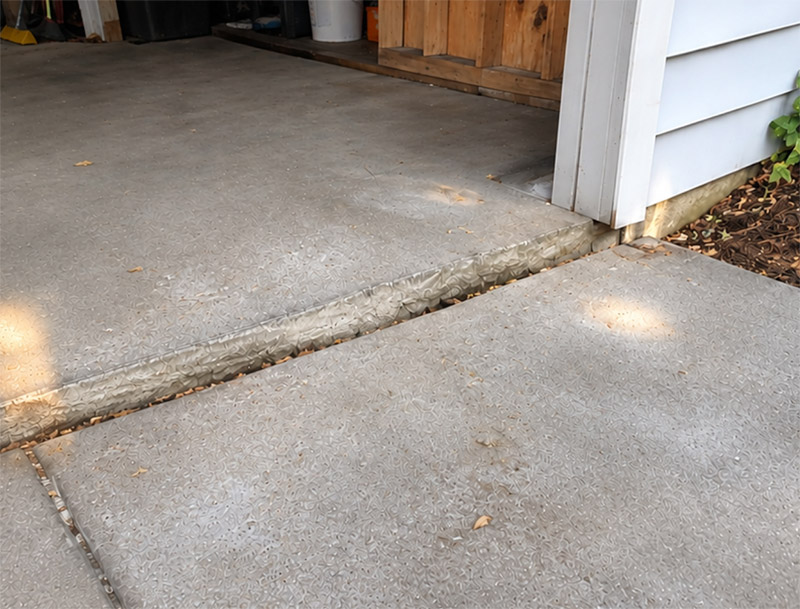
The shed sits firm. So does the sidewalk. But the approach pad between them has sunk. That leaves a step down, a gap, or a slope that points the wrong way.
Here is what property owners usually notice:
- A lip where the pad meets the shed base or the sidewalk
- A pad that tilts away from the door
- Water pooling on or near the pad after rain
- Carts, mowers or hand trucks catching on the edge
- A widening gap along the joints
The worry is usually the same: someone could trip, the gap could keep growing, and water could carry more soil out from under the slab.
Why It Happens Around Oak Brook
The concrete usually isn’t what failed. The soil under it is. These causes are common across Chicagoland, and the crew checks which one applies when they look at a pad:
- Loose backfill. Pads often sit next to structures where soil was dug out and refilled. If that fill wasn’t packed tight, it keeps settling for years.
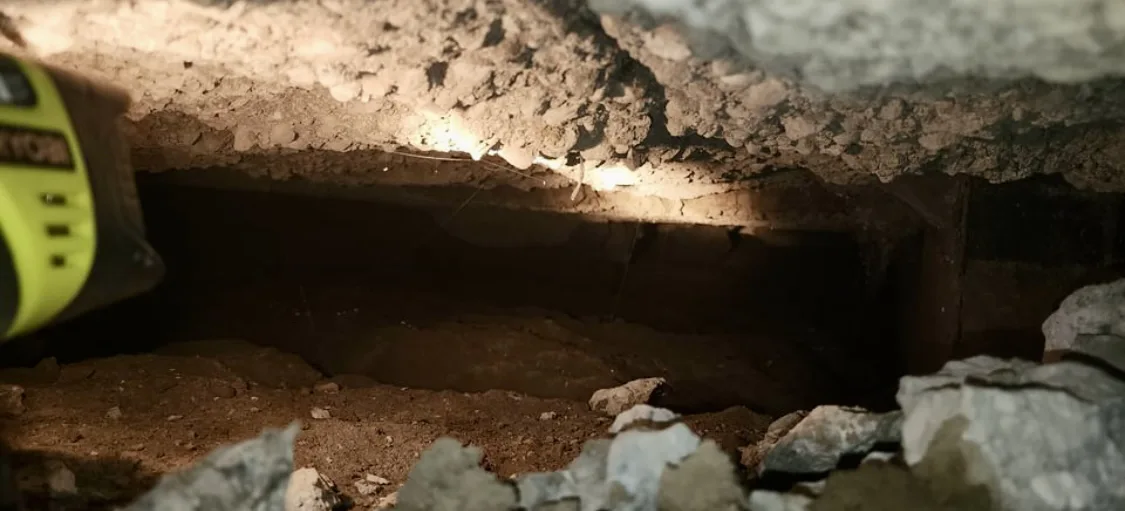
- Water washout. Roof runoff, downspouts and poor grading can carry soil out from under a slab. That leaves an empty space, called a void.
- Freeze-thaw cycles. Illinois winters move water in and out of the ground. Over time this loosens the support under small pads.
- Clay soils. Clay swells when wet and shrinks when dry, so the support under a slab shifts with the seasons.
Small approach pads settle more often than large slabs because they sit right beside other structures, where the ground has usually been disturbed. A pad that has dropped once will often drop again if the cause, especially water, isn’t dealt with.
How It’s Fixed: Polyurethane Foam Lifting
Raise-Rite IL uses polyurethane foam only. It is not mudjacking. Here is how a typical pad lift goes:
- Raise-Rite IL offers free virtual and instant estimates. You can send photos and get a read on the job before anyone visits.
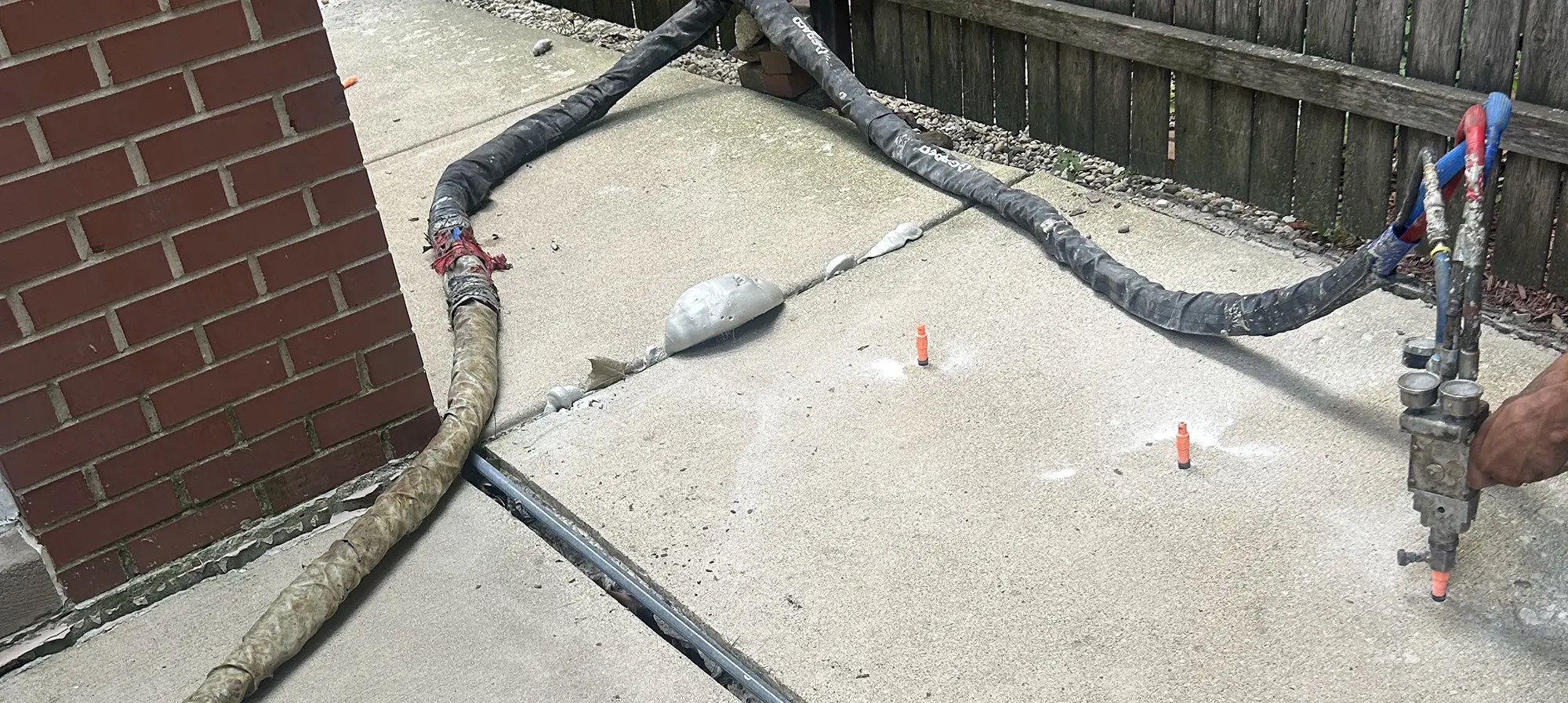
- Small injection holes. The crew drills small holes in the sunken pad.
- Foam injection. Polyurethane foam is injected under the pad. It fills voids and lifts the concrete in small, controlled steps.
- Checking the level. The crew watches the pad’s position against the shed and the sidewalk, and stops when the pad comes back into line.
- Patch and cleanup. The holes are patched and the area is cleaned up.
The foam contains 40%+ recycled and renewable materials. Because the work is done through small holes, there is no demolition and no new concrete to pour and cure. The crew will tell you at the estimate what timing to expect for your pad, including when it can be used again.
If water is part of the cause, Raise-Rite IL also offers Concrete caulking and sealing, as well as Water control and erosion mitigation, to help address it. Where the soil itself is weak, the company also offers soil improvement and DCP soil testing.
Before and After: What the Photos Show
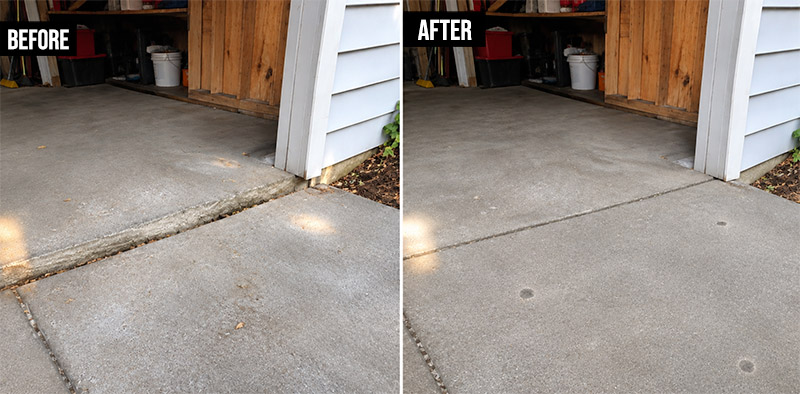
The before-and-after photo pair for this page illustrates a typical result. In the before image, the approach pad sits below the shed base and the sidewalk, leaving a visible edge. In the after image, the same pad has been lifted back into line, so the transition is smooth. The photos show the type of project described here, not a particular home or address.
The Result: A Smooth Transition Again
A good lift brings the pad back in line with the shed and the sidewalk. The trip edge is gone and the path is smooth again. Water should also drain the way it was meant to, rather than settling against the shed.
One note on what to expect: lifting brings concrete back toward level, and the Raise-Rite IL crew will tell you up front what is realistic. If a pad is badly broken or crumbling, replacement may be the better choice, and Raise-Rite IL will say so.
Raise-Rite IL’s work is backed by a 5-year warranty. It is a three-generation family business with roots going back to 1974, 50+ years of experience and 100,000+ jobs completed, plus engineering support through its sister company HMI.
Pads aren’t the only thing that settles. Raise-Rite IL also lifts Sidewalks and walkways, Slabs, driveways, patios, porches, steps, garage floors and pool decks.
Common Questions
Can a sunken pad be lifted instead of replaced?
Often, yes, if the concrete is mostly intact. Lifting skips the demolition and the wait for new concrete to cure. The crew will tell you at the estimate if replacement makes more sense.
Will I see the holes?
They are small and are patched after the lift.
Does Raise-Rite IL work on commercial properties?
Yes. Commercial markets include parking lots, loading docks and ramps, warehouse floors, schools and more.
Do you serve Oak Brook?
Raise-Rite IL serves Chicagoland and Illinois from its office at 195 Kehoe Blvd #5, Carol Stream, IL 60188.
Get Your Oak Brook Pad Looked At
Send a few photos or call for a free estimate. You’ll get a straight answer on whether lifting makes sense and what it will take.
Call Raise-Rite IL at 877-407-2473, visit raiserite.com or use the Contact page.